


Latin America closer to a sustainable energy transition

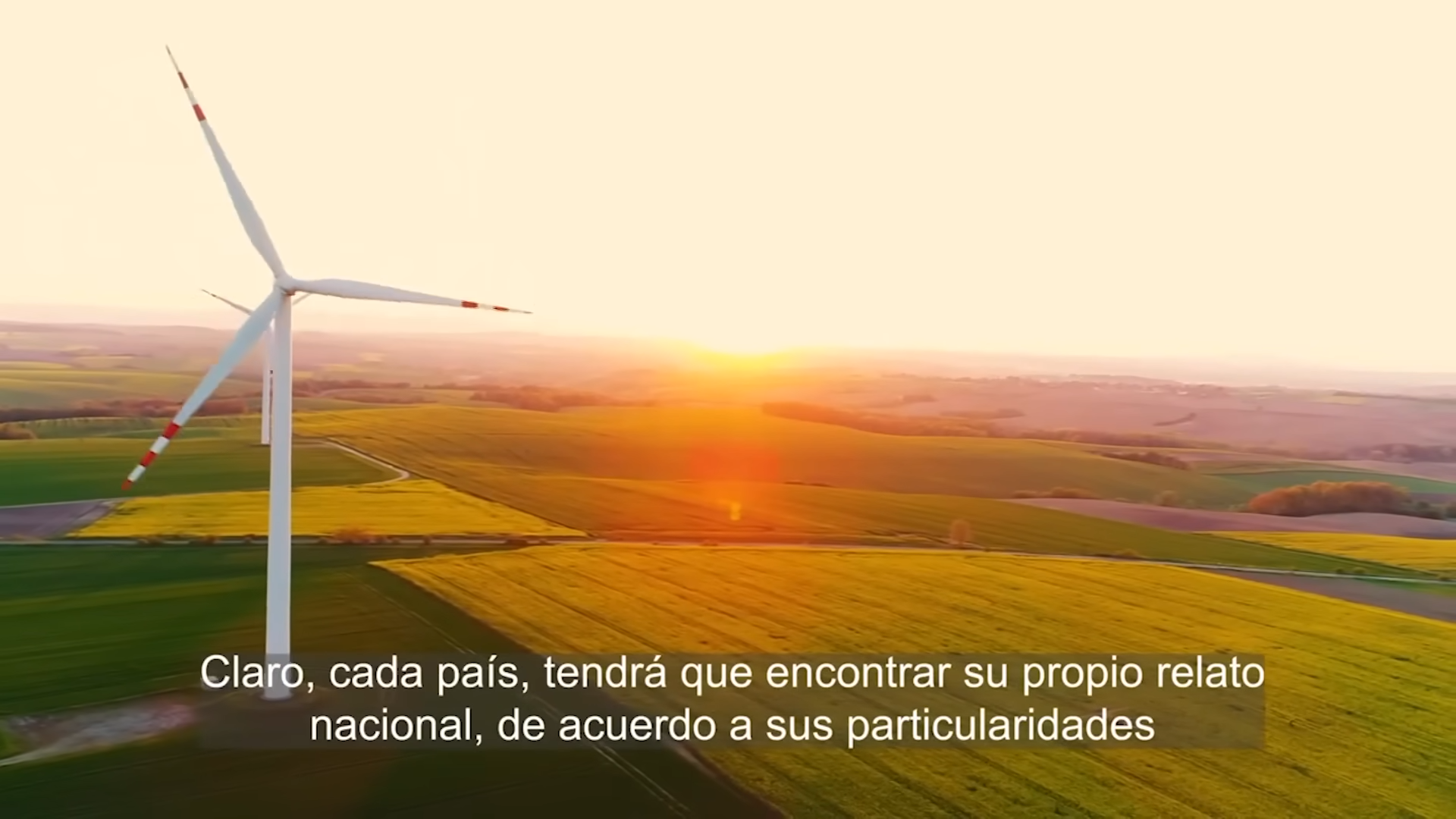
In 2020, the Ivy association conducted a study for the Latin American Energy Organization (OLADE) and the IDB that identified barriers to the introduction of renewable energy in Latin America. One of the main difficulties detected, which is repeated in many countries of the region, is the lack of continuity of transforming action.
The work also analyzed possible solutions for lifting the identified barriers. In particular, it was found that those few countries that have managed to make significant progress in the energy transition have done so on the basis of a broad political and social agreement, based on a national “narrative” that involves a wide range of public and private actors and identifies the main benefits of the transformation for the country, both political and economic, environmental, social, labor, geopolitical and commercial.
In this sense, the Uruguayan case is an example, since it has reached 98% of renewable energies in the electricity matrix (with close to 50% of wind, solar and biomass sources), reducing generation costs by US$ 500 million per year, generating tens of thousands of jobs and new business capacities, spilling US$ 2 billion on the local economy and generating foreign currency from the export of renewable energy surpluses.
For this reason, a few months ago a European climate foundation contacted us to finance a campaign to give regional diffusion to the Uruguayan experience and, in this way, contribute to the generation of a “national story” of each country in the region to support the advance of renewable energies.
The work, which is being finalized these days, far exceeded our expectations.
In recent months we have worked with governments, employers, workers, academia and civil society in a total of 9 countries in the region: Argentina, Bolivia, Colombia, Chile, Ecuador, Honduras, Mexico, Panama and the Dominican Republic. We have held dozens of virtual meetings, as well as face-to-face workshops in countries as diverse as Panama, the Dominican Republic and Argentina. We gave interviews to the media, held formal and informal conversations with the most diverse associations representing civil society and were received by Ministers and their government teams. We produce broadcast videos, webinars and social media campaigns.
How did Uruguay transform its energy matrix? see video here
We succeeded in overcoming false paradigms that renewable energies were more expensive than traditional energies or that a high percentage of this type of sources could destabilize a country’s electricity supply. We were able to show that renewable energies not only allow us to minimize environmental impact, but also to reduce costs, generate jobs and increase energy sovereignty. It was possible to show that the energy transition allows the region to position itself for the new global development model in which each country’s greenhouse gas emissions will be an increasingly important ingredient in favoring or hindering world trade. In particular, the exchanges made it possible to clarify the role that the region can play in the future green hydrogen economy.
In short, we are convinced that we have contributed to helping several countries in the region to move forward in defining their own national narrative and, in this way, accelerate their energy transition.
About Ivy
Ivy is a partnership aimed at helping Latin America accelerate its transition to a sustainable development model, contributing to the necessary global transformation.
The Ivy Association is composed of a team of Latin Americans with extensive experience in the leadership of disruptive public policies and transformative projects in the areas of energy, climate change mitigation and adaptation, sustainable mobility and land use planning, and circular economy.
We contribute to the design and implementation of public policies and the realization of innovative projects that reflect the different realities of our region.