


The physicist who used wind to make Uruguay an amazing clean energy case study

- Gerardo Lissardy, BBC News Mundo
- July 25, 2024
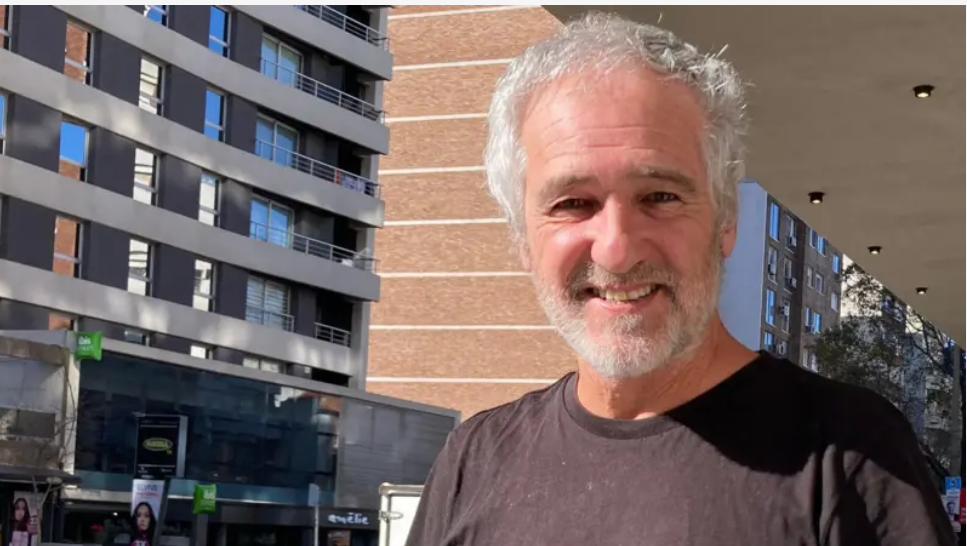
Physicist Ramón Méndez was sitting in his university office in Montevideo when he received the unexpected phone call that would change his life… and the way Uruguay produces electricity.
The caller was the Uruguayan Minister of Industry, Energy and Mining to invite him to lead an energy transition that would reduce the country’s dependence on imported fuels.
“They made me a crazy proposal,” Méndez recalls. “And I did something even crazier, which was to accept.”
Until then, in early 2008, Méndez had dedicated his professional career to academia, involved in subjects far removed from the real world, such as particle physics or the first microseconds of the Universe after the Big Bang.
Although he knew from that moment that he would accept the government’s invitation, it took him 15 days to confirm it, amidst fears about the ephemeral nature of the position and people he knew who suggested leaving it for someone who understood politics.
End of We recommend
But today Méndez, 63, believes that “thinking outside the box” was what allowed him to make Uruguay a unique case of transition to clean energy, using wind and sun.
In just a few years, the South American country began to generate up to 98% of its electricity from renewable sources, more than a third from wind power, a change that has been highlighted by international organizations and experts.
“What we did was design something that didn’t exist in the market: that was the striking thing and 15 years later it still is,” says Méndez in an interview with BBC Mundo. “They want to understand how we did that thing that the world wants to do and can’t.”
“An amazing rhythm.”
Uruguay was facing a critical energy situation when its government appealed to Méndez.
The price of oil had entered an upward curve that would take it to a record high of US$145 per barrel a few months later, in July 2008.
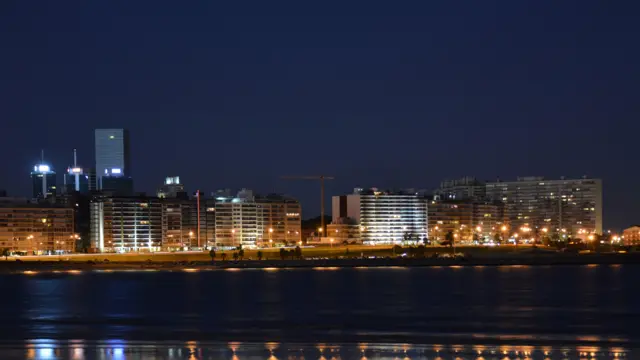
Lacking its own production of crude oil, natural gas or coal, the South American country of 3.4 million inhabitants had to import oil at ever-increasing costs.
A drought was affecting the hydroelectric power plants that were the country’s main source of energy. And the increasing use of fuels to meet the growing demand for electricity was putting upward pressure on tariffs.
Uruguayan authorities had begun to contemplate nuclear energy as an alternative to reduce costs and avoid frequent purchases of electricity from neighboring Argentina and Brazil.
This led Méndez to become interested in the problem, as someone close to nuclear physics after having spent 12 years as a researcher in countries in Europe and America before returning for personal reasons to his native Uruguay to work at the Faculty of Engineering of the University of the Republic.
Country-scale power generation was a new subject for him: “I didn’t know anything about it,” he admits.
The solution he proposed was a different path: to turn to indigenous renewable energies.
His proposal circulated in academic circles and caught the government’s attention. It was then that Méndez got the call to implement the change he had envisioned.
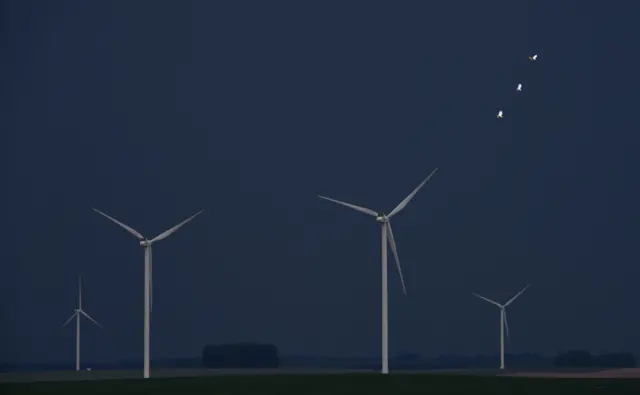
The bet on wind energy had as a reference what Denmark was doing as a pioneer in the field and its interconnection with Norwegian hydroelectric power plants to take energy from them when there is little wind.
But Uruguay sought this complementation within its own territory. It developed its own software to manage the intermittency of different energy sources.
The goal was to reach a total installed capacity of wind and solar power that would cover the peak of the country’s electricity demand. Water from the dams would then be used as an alternative source when the wind or sun went down.
This would require heavy investment, which in turn posed the challenge of reducing the perception of risk to lower the rate of return on capital.
Upon taking office as Uruguayan president in 2010, former Tupamaro guerrilla José Mujica sought an agreement with all political parties in Parliament on the country’s energy policy. And, when he succeeded that same year, stable targets were set for decades that were a positive signal to investors.
Uruguay held its first major tender to incorporate renewable sources into its energy matrix in 2011. And then, satisfied with the results obtained, the government called for new bids.

In just a decade, the country invested more than US$8 billion in renewable energies, equivalent to 10% of its current GDP.
Wind power went from covering just 1% of Uruguay’s electricity matrix in 2013 to 34% in 2018, “a staggering pace” and “faster than any other country,” said Joel Jaeger, a researcher at the World Resources Institute, in a January article for the U.S. space agency NASA.
The rest of the electricity matrix is made up of complementary sources, which also vary according to climatic conditions: hydro (currently 50%), biomass (12%), solar (3%) and fossil-based thermal energy (2%).
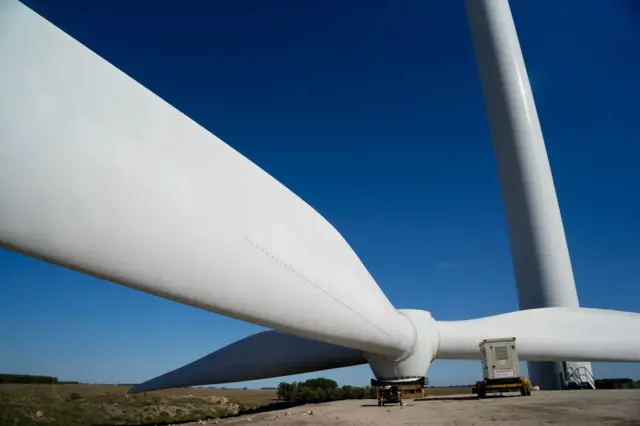
Dozens of wind farms, photovoltaic and biomass plants have changed the landscape in various parts of Uruguay.
A major change
Uruguay’s accelerated energy transition driven by Méndez has also been questioned domestically.
Some economists have pointed out that, instead of making the changes so quickly and with long-term contracts, the country could have made them gradually and benefited from the lower cost of incorporating renewable energies.
Others point out that Uruguay still has more expensive industrial and residential electricity tariffs than its regional neighbors such as Argentina, Brazil, Paraguay or Chile.
Felipe Bastarrica, director of the Observatory of Energy and Sustainable Development of the Catholic University of Uruguay, agrees that the reduction in technology costs could have been taken advantage of with a more staggered transition, but clarifies that this argument arises “with Monday’s newspaper” or with results in sight that no one predicted in their amount.
“I don’t criticize it (the change made) too much because at the time it was so beneficial with respect to the system we had, practically on the verge of failure and with very high costs, that the accelerator was stepped on,” Bastarrica tells BBC Mundo. “It was not only good environmentally, but economically and in terms of system resilience.”
He also considers it a “conceptual error” to attribute to the energy transition the higher cost of electricity in Uruguay compared to its neighbors, since generation represents about a third of the final price paid by the consumer, which has in fact fallen in real terms.
A study by the observatory concluded last year that, if it had not diversified its energy matrix, the country would have had an additional cost in electricity generation of US$1,621 million between 2020 and 2022.
Méndez says that “one of the hardest days” he had in the government was when the Ministry of Economy suggested to him to forget about lowering electricity tariffs due to the reduction in generation costs, since the difference would go to cover government costs.
But he points out that the country had other advantages with its energy transition, such as the generation of some 50,000 jobs (almost 3% of the total workforce) or the opportunity to seek trade agreements based on a low carbon footprint.

Moving towards the elimination of the use of fossil fuels in energy systems in an orderly transition to renewable energies to halt climate change are goals agreed at the United Nations COP28 summit held in Dubai in December.
However, even wealthy countries are seeking to define how to achieve these objectives.
Méndez explains that this has led governments and experts to look at what Uruguay has done.
“Not a week goes by that I don’t get two or three invitations to give a talk in some country around the world,” he says, “and increasingly in developed countries.”
After leading Uruguay’s energy policy for eight years, Méndez was selected by Fortune magazine as one of the 50 global leaders of 2016 for helping to show “how to decarbonize your economy.”
In his opinion, the keys to Uruguay’s energy strategy were a long-term policy agreed upon by all parties and the creation of adequate conditions to process the transformation.
“Spontaneously the energy transition does not happen, even if renewable energies are cheaper than traditional ones,” he warns.
Méndez founded with friends Ivy, a non-profit foundation financed with North American and European philanthropic funds that advises countries in the region such as Colombia, Chile, Honduras and the Dominican Republic on these issues.
Sitting in a Montevideo café under a winter sun, Méndez says he has to manage with caution his new life as an international advisor, which includes meetings with presidents and new calls from unexpected places.
“While the change from being a humble university professor studying the Big Bang to public policy in Uruguay was extraordinary,” he reflects, “this change is much bigger.”
[/et_pb_text][/et_pb_column]
[/et_pb_row]
[/et_pb_section]