


Sustainable and inclusive development at the local level

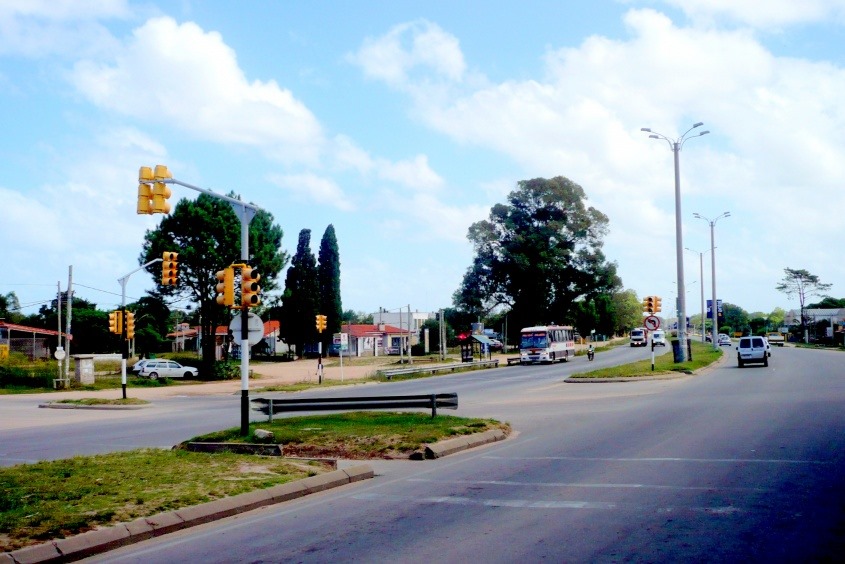
The Fundación Canaria para la Modernización y Desarrollo Local (Fundación Modelo) of the Canary Islands, Spain, in collaboration with the Asociación Ivy (Asociación para el Desarrollo y la Innovación Sostenible) of Uruguay, together with the municipal government of La Paloma (Rocha) developed a project to promote the transition to sustainable and climate-responsible development.
Local governments, especially in transition countries, often have very specific competencies over their territory that do not usually cover the broad scope required by climate policies and, in addition, have scarce resources directly allocated to the implementation of this type of policies. However, due to their proximity to the population and local reality, they tend to have greater possibilities of influencing long-term cultural transformations for an inclusive and climate-responsible transition.
In this sense, this project is based on the idea that if local governments have an adequate local development strategy that identifies risks and transforms them into opportunities to generate wealth in a sustainable manner, they will be better positioned to play a relevant role in the transition from the current development model to a more climate-responsible, inclusive and supportive one.
The objective of the project is to promote, in the municipal governments of La Paloma (Uruguay) and Praia (Cape Verde), the acquisition of capacities to promote the transition to sustainable and climate-responsible development, based on strategies that transform their current risks and vulnerabilities into opportunities for the generation of sustainable wealth.
The methodological approach adopted comprises three (3) phases:
The first phase focuses on understanding the demographic, social, economic and institutional dynamics of the municipality, in order to identify vulnerabilities, capacities and strengths of the local socio-ecological system for adaptation to climate forcing and observed impacts, taking into account the specific competencies of the municipal government and its ability to influence the development of adaptation policies at the local level.
The second phase focused on proposing a set of hypotheses for local development based on the results of the previous phase, from which a system of key ideas about the type of development to be promoted for La Paloma was established:
- A benchmark territory in ecosystem-based climate change adaptation solutions.
- A place to live permanently or temporarily, due to its environmental quality, technological infrastructure and socio-cultural capital.
- Local development based on knowledge and innovation industries, supported by the creative capacity of the community.
- Diversified tourist destination with an alternative offer for the reception of congresses and events, based on local strengths.
- Local gastronomy circuits with designation of origin that stand out for their commitment to the circular, inclusive and solidarity economy.
- Civic-commercial-cultural center of the towns and resorts along Route 10.
The third phase focused on developing the lines of action necessary to promote this system of strong ideas. One of these lines was elaborated in greater detail, through the deepening of a development and management model: the Multiespacio Casa del Mar.
It is a collaborative work environment to promote activities that foster the local productive fabric, merging coworking with the exchange of knowledge and sustainable and climate resilient development, in a participatory, community, inclusive and gender perspective.
It is designed to attract and integrate the local community, national and international visitors, small businesses, professionals and enthusiasts in general, interested in the protection of nature, the sustainable development of coastal space, addressing creative or technological challenges and the integration of the circular economy approach in local development.
The project supported the implementation of physical works and the provision of equipment to facilitate and accelerate its operation, incorporating in its design the basic ideas of sustainability, care for ecosystems and biodiversity, productive diversification and social inclusion.
More than a physical space, the multi-space was conceived as a catalyst for collaboration and the exchange of ideas, encouraging the community to explore new perspectives and opportunities for sustainable endogenous development.
( This study was developed with the financial support of the Cabildo Insular de Tenerife of the Autonomous Community of the Canary Islands within the framework of the call for grants for the year 2022 to finance international development cooperation projects carried out by Canarian cooperation agents. The grant proposal was submitted by the Fundación Canaria para la Modernización y Desarrollo Local (Fundación Modelo) of the Canary Islands, Spain, in collaboration with Asociación Ivy (Asociación para el Desarrollo y la Innovación Sostenible) of Uruguay. Local counterparts were the municipal government of La Paloma, department of Rocha, of the Oriental Republic of Uruguay, and the municipal government of Praia, of the Republic of Cape Verde).